Imrane
Local guide & founder · 8 January 2026
The croissant, the pain au chocolat, the tarte aux fraises, the éclair. French pastries are an art form with a grammar of their own. Here's how to read it.
French pastry is one of the most technically demanding forms of cooking in the world. A great croissant requires 27 separate layers of butter and dough, each laminated by hand, rested overnight, and baked at a temperature that transforms the whole thing into a revelation of crunch and air and richness. That this object exists at all — that you can buy one at 8am for €1.50 and eat it on a cobblestone street in Montmartre — is extraordinary.
The Croissant: Anatomy of a Classic
A good croissant is an engineering achievement. The outside should shatter at the first bite — not bend, not tear, shatter — releasing a cascade of laminated layers and the smell of butter that has been coaxed into something more than itself by heat. The inside should be soft, slightly chewy, with a honeycomb structure that holds its shape.
A croissant that bends when you pick it up was made with margarine or cheap butter. A croissant that smells of butter before you bite it was made correctly. The croissant ordinaire is made with straight (non-laminated) dough and is cheaper and inferior. Always ask for the croissant beurre.
The test
Pick up a croissant and look at the underside. It should be evenly golden-brown from edge to edge, with visible horizontal lines showing the lamination. If the bottom is pale or the layers are invisible, move on.
Pain au Chocolat
The pain au chocolat (called a chocolatine in the southwest of France, a fact that launches genuine arguments) is a rectangular laminated pastry with two bars of dark chocolate inside. The quality of the chocolate matters enormously — it should be bitter enough to cut through the butter, not the waxy sweetness of cheap chocolate. The pastry itself should follow the same standards as the croissant: shatteringly crisp outside, soft and layered inside.
The Tarte and the Éclair
Tarte aux Fraises
The French strawberry tart is a study in restraint. A buttery, crisp pâte sablée base. A layer of crème pâtissière — vanilla custard made with egg yolks and real vanilla. Fresh strawberries, arranged with geometric precision. A thin brush of nappage to make them shine. Nothing else. The excellence is in the quality of each element and the absence of anything that doesn't need to be there.
L'Éclair
The éclair — a long choux pastry shell filled with flavoured cream and glazed on top — is one of the most technically demanding of the classic pastries. The choux must be crisp and dry, not soft and chewy (a sign it was baked too quickly). The cream inside must be cold, well-flavoured and not sweet to excess. The glaze on top must be smooth and glossy, applied at exactly the right moment.
Seasonal Pastries: Following the Calendar
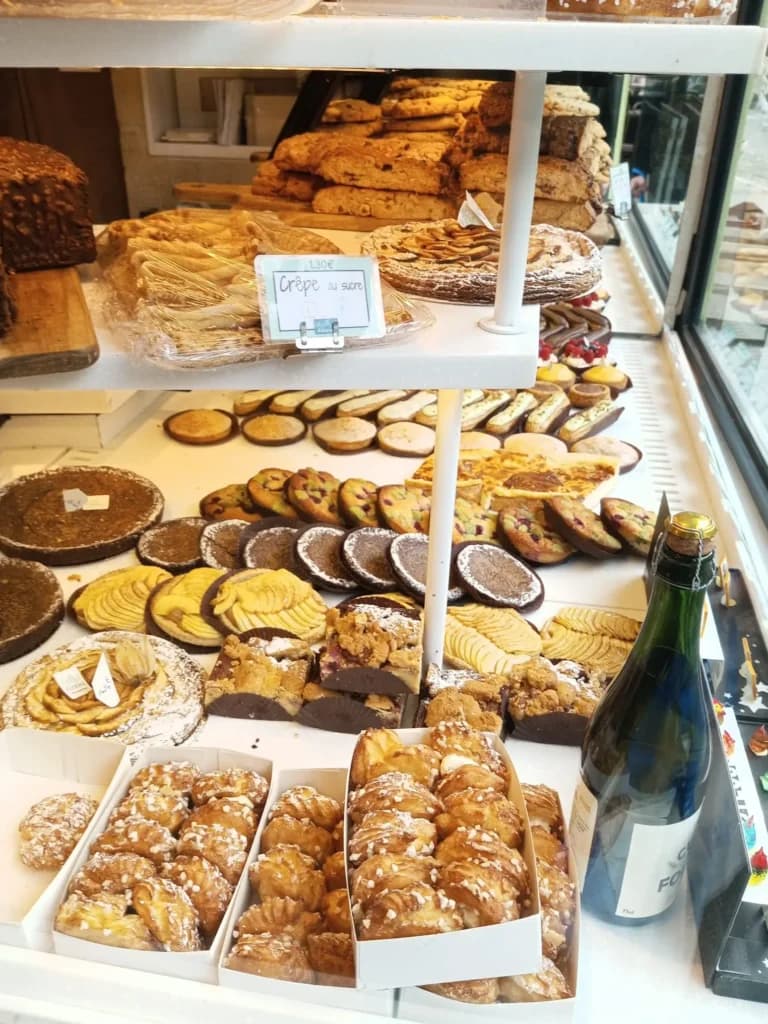
French pastry follows the seasons in the same way French cooking does. In January, the galette des rois (a puff pastry filled with almond cream) is everywhere, because January 6th is Epiphany and this is what you eat. In spring, the tarte aux fraises appears the moment the first domestic strawberries arrive. In autumn, the tarte tatin (caramelised apple tart) takes over.
The seasonal pastry on offer at a good Montmartre boulangerie is always worth ordering, precisely because it's temporary. Ask your guide what's in season.
What We Taste on the Tour
On our Montmartre Food & Wine Tour, we stop at a boulangerie that represents everything we've described above — traditional methods, exceptional butter, bread and pastries baked twice daily. You'll taste the croissant that gives you the standard to measure all future croissants against. You'll also try whatever is seasonal and extraordinary that week.
- A freshly baked croissant beurre at its best
- Fresh bread from the oven — including the legendary baguette tradition
- Seasonal pastry selected by your guide the morning of the tour
- Context about what makes Montmartre's boulangerie culture exceptional
One croissant from the right boulangerie in Montmartre will change how you eat croissants everywhere else for the rest of your life. And that is not a bad thing to have happen to you.
Ready to Taste Montmartre?
Join our intimate Montmartre Food & Wine Tour — 3 hours, 15 tastings, one unforgettable afternoon.
Discover the Tour