Imrane
Local guide & founder · 15 April 2026
Paris is one of the world's great oyster cities — and most visitors don't know it. Here's the guide to eating oysters in the French capital, from the best spots to the etiquette.
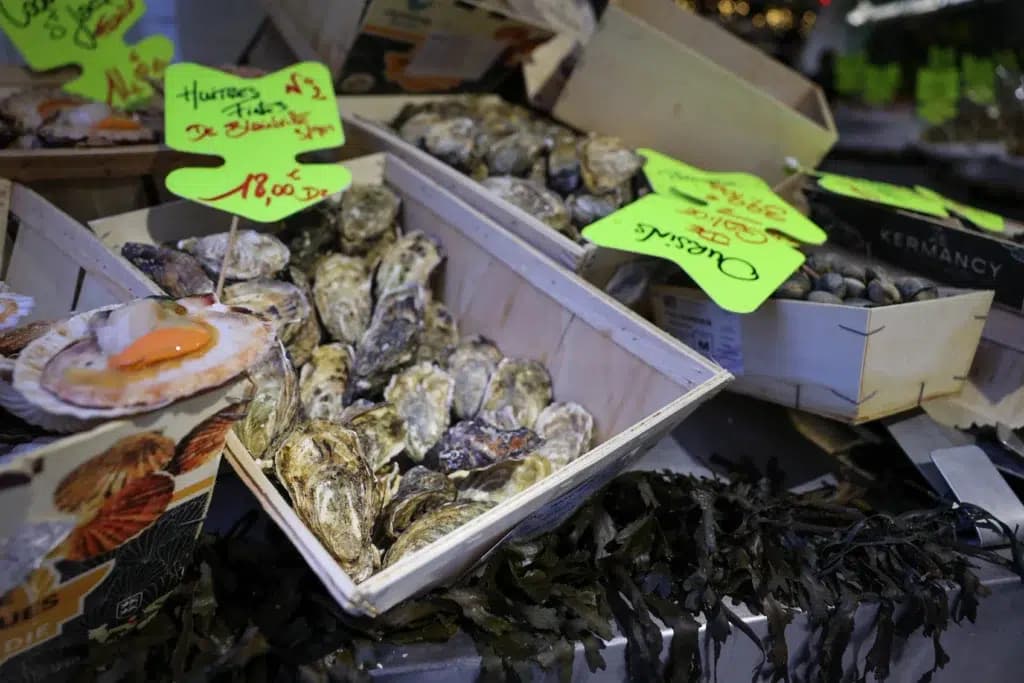
Oysters in Paris feel like a contradiction. The city is hundreds of kilometres from the sea. And yet Parisians consume more oysters per capita than almost any coastal city in France. Walk through a market in the 18th arrondissement on a Saturday morning and you'll find a fishmonger's stall surrounded by Parisians, standing in the cold, eating oysters from the shell with a squeeze of lemon and a glass of Muscadet. It's one of the city's great pleasures, and most tourists never discover it.
Why Paris Is an Oyster City
The history is practical: France produces the finest oysters in the world, primarily from Brittany, Normandy, and the Atlantic coast. Paris, as the nation's capital, has always demanded the best of everything that France produces — and so the oysters arrive by the crate every morning, as fresh as anything you'll find at the source. The cold water, the swift transport logistics, and the French reverence for quality control mean that a Parisian oyster market is not second-best to the coast.
Understanding French Oyster Varieties
Creuse (Hollow Oysters)
The Creuse — the cupped, elongated oyster — is the most commonly eaten oyster in France. Varieties are numbered by size: 00 (largest) to 5 (smallest). A size 3 is what most Parisians default to — a comfortable mouthful, not so small it feels like a snack, not so large it becomes a challenge. The flavour varies significantly by region of origin: Breton oysters tend to be brinier and more mineral, Norman ones creamier and milder.
Plates (Flat Oysters)
The Plate — flat-shelled, round, and considerably rarer — is the oyster that serious eaters seek out. Belon oysters from the Bélon river in Brittany are the most famous: intensely flavoured, metallic, complex, with a finish that lingers for a full minute. They're not for the faint-hearted. They're also not for the uninitiated — start with a Creuse, earn your way to a Belon.
How to Eat an Oyster in Paris
The French approach to oysters is minimal. The point is the oyster itself — not what you add to it. A wedge of lemon is acceptable, and a light squeeze is the local default. Small shallots in red wine vinegar (mignonette) are traditional and excellent. A few drops of Tabasco is acceptable if you must. Cocktail sauce or any creamy condiment is not.
The etiquette
In Paris, you drink the liquid in the shell (the liquor) along with the oyster — it carries much of the flavour. Slurping is not just acceptable; it's expected. Chew once or twice before swallowing — you'll catch flavours that you'd miss otherwise.
What to Drink with Oysters
Muscadet from the Loire Valley is the canonical pairing — its bone-dry minerality mirrors the brine of a good Breton oyster perfectly. Chablis works equally well. Champagne is the celebratory choice and genuinely excellent with oysters, despite the price premium. Avoid red wine and anything sweet.
For non-wine drinkers: a cold, unflavoured sparkling water is the best non-alcoholic companion. The carbonation cleanses the palate between oysters. Still water dulls the experience.
Where to Eat Oysters in Paris
The best oysters in Paris are not in restaurants — they're at the market. Every major Paris market has at least one poissonnerie with a standing oyster bar: you buy a half-dozen or dozen, they're opened in front of you, you stand at the counter with a glass of wine poured from a bottle in a bucket of ice, and you eat. This is how Parisians actually do it.
- Marché d'Aligre (12th): one of Paris's best markets with excellent seafood stalls
- Marché Raspail (6th): the Saturday organic market has exceptional quality
- Marché Saxe-Breteuil (7th): neighbourhood market with good seafood section
- Poissonneries in Montmartre: our local suppliers, some of the freshest in the city
Oysters on Our Food Tour
Oysters are part of our Montmartre food tour — a deliberate choice, because they represent something most food tours skip entirely: the sea, in a city that has learned to bring the sea to it. We taste them with context — variety, provenance, and the wine pairing that makes the combination more than the sum of its parts.
An oyster eaten standing at a Paris market counter, glass in hand, is one of the simplest and most complete pleasures the city offers. Don't let it pass you by.
Ready to Taste Montmartre?
Join our intimate Montmartre Food & Wine Tour — 3 hours, 15 tastings, one unforgettable afternoon.
Discover the Tour